
Complete Guide to Google Business Messaging Setup
“The best way to predict the future is to create it.” — Peter Drucker.
Set up Google Business messaging with this small-business guide. It outlines how to prepare a Google Business Profile and enable messaging. You’ll also add click-to-message in Google Ads and integrate with the Business Messages API and agents.
It explains the Message button in Search and Maps via Google Business Messages. It explains how conversations work on Google’s mobile messaging surface for iOS and Android. It also covers the how much does it cost to advertise your business on Google messaging lifecycle, from registering to replying, and how conversations stay active for 30 days.
It further includes chat centralization, security, and compliance. It offers tips for optimization and measuring ROI. The information is based on current Google updates and follows Creative Commons and Apache licenses.
This guide is a practical tutorial for setting up Google Business messaging. It lays out simple steps. That way, teams can rapidly launch secure, measurable messaging workflows.
What Google Business messaging is and why it matters for small businesses
Google Business messaging enables direct chat from Search and Maps. It works on both Android and iOS, supports images and videos, and keeps conversations going even when you’re not online. This is great for small teams to talk directly to customers, making it easier to respond quickly.
Core features and definition
Click-to-message via Business Messages adds buttons in Search/Maps. Replies can flow via Business Messages API, webhooks, or Google Business Profile messaging. It includes features like automated greetings and rich media, and you can follow up with customers for 30 days after their last message.
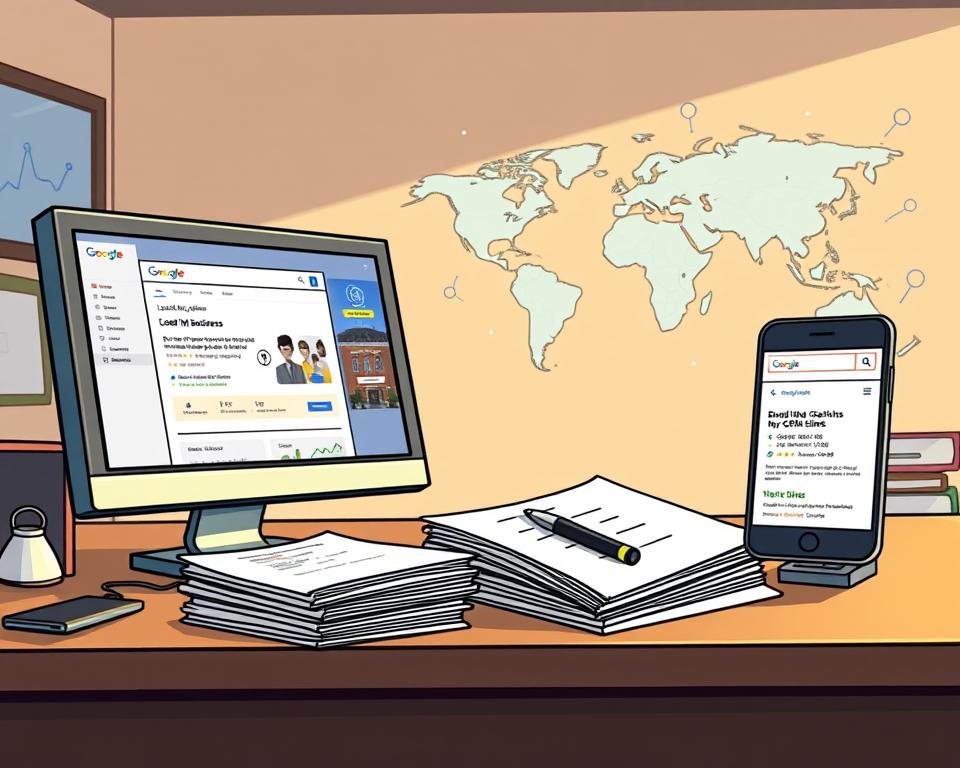
Customer demand and industry context
Users often prefer text over calls for fast questions and bookings. With mobile shopping on the rise, businesses need to offer instant chat for service and product inquiries. Click-to-message works in both Google Ads and organic listings, making it easy for customers to get quick answers.
Key benefits for small businesses
- Better discoverability in Search/Maps, boosting CTR and lead capture.
- Reduced time-to-contact, improving conversions from mobile users avoiding calls/email.
- Booking, updates, and fast support workflows that fit small teams.
- Chances to request feedback and get customers to save your contact for repeat sales.
Marketing1on1 and similar agencies can build messaging plans. They enable quick responses while maximizing Google Business messaging value.
Google Business messaging setup
This outline offers a quick look at common setup paths and a key lifecycle note for businesses planning messaging. It guides teams to select native, Ads, API, or unified inbox options.
Setup path overview
- Use Google Business Profile: turn on Messages (Customers), verify SMS phone if requested, then reply via dashboard or app. This suits small teams needing quick, low-code setup.
- Click-to-message via Google Ads: create message extensions in a campaign, set the business name and phone number, add a clear CTA and pre-filled message text so ads start conversations directly from search or display placements.
- API-driven integration: register for Business Messages, create an agent that represents the brand, configure a webhook to receive JSON payloads, and send replies through the Business Messages API. Use agents to route conversations to staff, locations, or automated systems.
- Third-party/unified inbox: connect to Locobuzz or Birdeye to centralize chats, automate flows, enrich CRM, and report. They improve response time and scalability.
Lifecycle note
- User taps Message, agent greets, user replies. Google forwards the chat to the webhook as JSON.
- The business routes the payload to the right staff member or bot, then responds using the Business Messages API. Asynchronous conversation continues. Businesses may send messages up to 30 days after the user’s last message under current policies.
- Messages are encrypted between user devices and Google servers and between Google servers and Business Messages agents. Spam scanning occurs; third-party keys aren’t supported.
Use a tutorial, test webhooks, and validate payloads before launch. Those planning larger deployments should evaluate Google Business messaging integration against existing CRMs and support tools to avoid redundant work. Review product notices/dev docs ahead of heavy integration.
Preparation: Google Business Profile for messaging
Before chatting, ensure your profile is clean, verified, and consistent. Small teams should see this as part of setting up Google Business messaging. That way, customers find accurate info in Search and Maps.
Verification and location confirmation
Verification unlocks messaging and proves ownership. It’s important to verify every location that will receive messages.
Messaging won’t work without verified locations. Ensure the correct account owns each listing and details match the physical site.
Update business information and phone number
Use a reliable phone number for SMS alerts. Message extensions rely on the exact phone for messaging and tracking.
Make sure to fill out hours, services, and profile details. This ensures automated replies and staff responses are consistent. In the Google Business Profile dashboard, enable Messages under Customers > Messages and verify your number if asked.
Prepare staff and workflows pre-launch. Meeting Google’s standards maintains chat access and benefits.
Enable messaging via Google Business Profile
Enabling messaging lets businesses meet customers where they prefer to chat. Use the steps below to complete Google Business messaging setup. You’ll see how the Messages app supports daily conversation handling.
Activate in the dashboard
Sign in with the Google account that manages the verified Business Profile. Choose the location and go to Customers > Messages (or Messages).
When available, toggle on messaging/chat. Verify an SMS phone if asked. Adjust greetings/options to guide first contact.
Monitor early activity and response rate. Google expects timely replies and may suspend messaging for long inactivity or poor response metrics. This is central to tutorials and initial setup.
Using the Google Business Messages app
Get Google Business Messages in Google Play or the App Store. Sign in with the Business Profile owner account to link chats.
The app displays incoming chats and lets an agent reply, set greetings, and manage threads on mobile. It handles rich media natively on phones, while the API route delivers messages as JSON to webhooks.
If response time matters, use the app for quick replies. Leverage dashboard tools for broader optimization. Regular checks keep the experience reliable and compliant.
Set up click-to-message in Google Ads
Paid search can start fast conversations with ads that let users message directly. You’ll add message extensions, craft pre-filled text, and identify best ROI scenarios.
To create a message extension, log into Google Ads and open Campaigns. In Ad Extensions, select New message extension. Provide your business name plus the same messaging phone. Include a CTA and pre-filled text shown on mobile.
Save and attach the extension to campaigns/ad groups targeting local/high-intent queries.
After launching, keep an eye on costs and quality. Click-to-message is free, but messaging volume can lead to extra charges. Watch chat rates and tune bids to balance cost vs. conversion value.
Best use cases
- Engage high-intent users who prefer texting.
- Schedule appointments for salons, clinics, and auto dealers where an immediate reply increases bookings.
- Answer pre-purchase questions about inventory, pricing, or availability to shorten the sales cycle.
- Give quick help that turns searches into foot traffic.
Pair message extensions with callouts/sitelinks for more contact paths. Send messages from ads to a priority support queue so agents see them first. This boosts response time and enhances customer engagement with Google Business messaging.
Test different CTAs and pre-filled messages to see which ones get more qualified replies. Apply data to tune targeting and expand effective use.
Google Business messaging integration with APIs and agents
Inbox vs. full integration changes your customer communication model. Small teams may prefer the built-in dashboard for speed. But big brands need a programmable system for better customer service.
The Business Messages API plus agents power advanced systems.
- Register and create a brand agent.
- Google delivers messages to the webhook (JSON).
- Agent logic processes, routes, and replies through API.
Messages support rich media, auto greetings, and 30-day threads. Data is encrypted, keeping it safe. Spam checks are in place; third-party encryption keys aren’t supported.
When integration is better
- Native Profile messaging fits small teams that need simplicity.
- Pick API for multi-location routing and CRM integration.
- Use the API to centralize chats in Locobuzz or similar CRM-connected inboxes.
API integration is better for scaling and custom needs. Native is best when ease and speed matter.
Tools and platforms to centralize messages and refine response workflows
Centralization lets teams manage Google Business messages with email/social/web chat. Platforms like Locobuzz and Birdeye collect threads into a single inbox. Chats are connected to CRM. This supports faster replies and clear ownership.
Using a unified inbox simplifies reporting and analytics. History visibility improves handoffs. CRM enrichment gives marketing and sales context for follow-ups, boosting the value of each interaction.
Third-party platforms and integration benefits
Integrations bind messaging with current systems. They add case/SLAs/tagging to prioritize valuable leads. Locobuzz provides omnichannel support and reporting widgets for message/agent trends.
Birdeye focuses on channel unification and lead capture through messaging. Both reduce friction by routing correctly and cutting duplication. Consolidated reporting aids planning and ROI.
Automation and bot journeys
Automations take routine tasks off agents. Bots can greet customers, gather context, and answer FAQs. Bots can manage booking/pricing/carousels then escalate as needed.
Well-designed bot journeys support Google Business messaging optimization by lowering response times and maintaining consistent tone. Handoff rules must be explicit so agents receive full context when they take over. CRM logging preserves history for future use.
- Smart intent routing delivers leads correctly.
- Greetings capture details for faster outcomes.
- Use analytics to assess automation and gaps.
Platforms plus bots enhance engagement in Google Business messaging. Teams gain 24/7 coverage, clearer reporting, and more scalable operations without sacrificing personalized service.
Security, privacy, and message encryption
Consider security/privacy when enabling messaging. Transport encryption protects device↔Google traffic. It also encrypts messages between Google servers and Business Messages agents. This layer keeps chats safer.
Google scans for spam/abuse. This means Google looks at the content of messages. Businesses can’t apply third-party end-to-end keys. This is something teams should consider when planning their integrations.
How security works
- Transport encryption for device↔Google and Google↔agent.
- On-device security with device-wide encryption.
- Content scanning for spam and policy enforcement, which requires Google access to message data.
Compliance and data handling
Businesses in regulated industries need to follow rules like HIPAA and CCPA. Since Google might see message content, companies with strict security needs should look into other options. Consult counsel prior to setup.
Webhooks deliver JSON payloads. Developers should make sure webhooks are secure. Use authentication and data minimization. External platforms can enhance controls.
Read dev/policy docs up front. Check licensing and change notices. Staying current avoids compliance issues as things evolve.
Optimization tips for Google Business messaging
Using features wisely can improve outcomes. Focus on rich media, simple flows, and fast replies. This section offers practical tips for better interactions and results.
Rich media and conversational UX
Showcase products/services with images, short videos, carousels. Visuals speed decisions and reduce questions.
Keep flows simple—one question at a time. Provide clear actions. This keeps threads concise and guides conversions.
Include human support when automation fails. This maintains trust and prevents frustration.
Response time & greetings
Monitor average reply times in your Profile. Fast responses lift engagement and reduce risk.
Set automated greetings with business hours and response times. Templates and quick buttons accelerate replies.
- Keep messages short and clear.
- Request feedback/reviews after resolution.
- Track response rates and aim to reply within Google’s times.
Ongoing optimization keeps teams sharp. Best practice adherence improves productivity and loyalty.
Customer engagement best practices
Effective messaging is about clear operations and smooth customer interactions. Planning reduces lag and confusion. A solid setup organizes conversations and links CRM for faster solutions.
Operational guidelines are essential. They define who answers, how, and when. Choose a lead agent and escalation rules. Ensure training covers tone, templates, and CRM updates.
- Centralize conversations using integrations to avoid fragmentation.
- Monitor analytics and automate during peaks to protect SLAs.
- Plan schedules and on-call rotations to keep coverage consistent.
Customer experience practices start with a warm automated greeting. Share response time and available services. Keep language simple and confirm needs before offering booking/payment links.
- Request permission before promotions and ask users to save your contact.
- Gather feedback/reviews after resolution to tune bots/scripts.
- Follow privacy guidance; don’t share sensitive data insecurely.
Best practices lead to higher satisfaction and faster fixes. Clear plans, regular training, and welcoming greetings make a big difference. With proper setup, messaging becomes vital for booking/support/feedback.
Common challenges & management
It’s powerful for customer chat yet challenging without good management. Businesses face technical and operational issues that can slow down responses.
A clear plan helps handle volume. Adopt a unified inbox to centralize messages. Make sure complex questions go to the right people based on their skills.
Using bots can help by answering simple questions. Set rules for when to automatically pass on messages to humans. Also, link chat logs to CRMs like Salesforce to avoid asking the same questions again.
Practical staffing plans means having the right people on at busy times. Use alerts for surges. Then add help before slowdowns.
Use analytics for performance insight. Measure volume, speed, and conversion. Use dashboards to show the most important numbers to everyone.
- Measure message-driven conversions to assess ROI.
- Send recurring reports to align marketing/ops.
- Compare call volume and resolution speed to show benefits.
Consider total cost beyond free features. Costs include subscription fees, setup costs, and time for staff. Calculate ROI with a straightforward model.
Continuously look to improve messaging. Experiment with greetings, refine scripts, and streamline handoffs. Even small changes can make a big difference without spending a lot.
Final thoughts
Google Business messaging setup is a mobile-first way for small companies to get leads and support customers. It creates a direct line for prospects to connect. This makes it a key asset for small businesses.
Three setup paths: native messaging, Google Ads extensions, Business Messages API. Use tools like Locobuzz/Birdeye to manage chats. This maintains consistency and best practices.
Security and following rules are important. Messages are encrypted, and Google checks for spam. Handle data carefully and follow applicable laws.
Start by verifying your Profile and enabling messaging. Include Ads extensions as needed. Choose how to integrate based on your size. Use automation/CRM to track performance.
Get setup help from Marketing1on1. They integrate platforms, build bots, and train teams. This raises engagement and ROI. Best practices make messaging a reliable growth lever.
Common Questions
What is Google Business Messaging vs. Profile messaging?
Google Business Messaging enables texting brands from Search and Maps. It works on both Android and iOS. Businesses can reply directly from the dashboard or use the API for more features.
Why enable Google Business messaging?
It helps visibility and lead capture. Great for fast contact and varied tasks. It also helps save contact details.
Main setup paths?
You can enable it through the Business Profile, Google Ads, or the Business Messages API. Each has distinct steps.
Messaging lifecycle from tap to reply?
Lifecycle starts when the user taps Message. The agent greets; the user replies. Google forwards the message to the business.